

We use cookies to ensure that we give you the best experience on our website.
By using this site, you agree to our use of cookies. Find out more.
 April 03, 2026
|
April 03, 2026
|
 |
|
 Visual Analytics
In today's world security is not about watching things on a screen. It is about using technology to make our lives safer and more efficient. At the centre of this change is Video Analytics. This is a tool that takes the pictures from cameras and turns them into useful information. From making security better to helping businesses make decisions Video Analytics is changing many industries around the world.
This blog is about how Video Analytics changing smart surveillance. We will look at the technologies that make it work, how it is used, what benefits it has and what challenges it faces.
Video Analytics is a way to use computers to look at video footage and find patterns or things that're not normal. This is different from the way of watching cameras, where a person had to sit and watch the screens all the time. With Video Analytics computers can look at a lot of video at the time and find things that might be a problem .
Modern Video analysis software uses computer programs that can learn and get better over time. These programs can recognize objects, faces and movements. Even how people are feeling. They can find activities, count how many people are in a place and watch traffic all without a person needing to be there.
Given below are the Important Technologies for video analytics explained in a detailed manner:
Artificial Intelligence is the backbone of Video Analytics which comes under the video analytics services. It allows computers to learn from the video footage and get better at finding things over time. Machine Learning is a part of Artificial Intelligence that helps computers recognize patterns and make predictions.
Computer Vision is a technology that allows computers to understand what they are seeing. It helps Video analysis software recognize objects, track movements and understand what is happening in a scene.
Data Annotation is the process of labelling video footage so that computers can understand what they are seeing. This is a step in making sure that Video Analytics systems work correctly.
Cloud Computing allows for a lot of video footage to be stored and processed. Edge Processing is a way to process video footage closer to where it's being taken, which makes it faster and more efficient.
AI Development is the process of creating custom Video Analytics solutions for needs. This allows businesses to create systems that are tailored to their requirements.
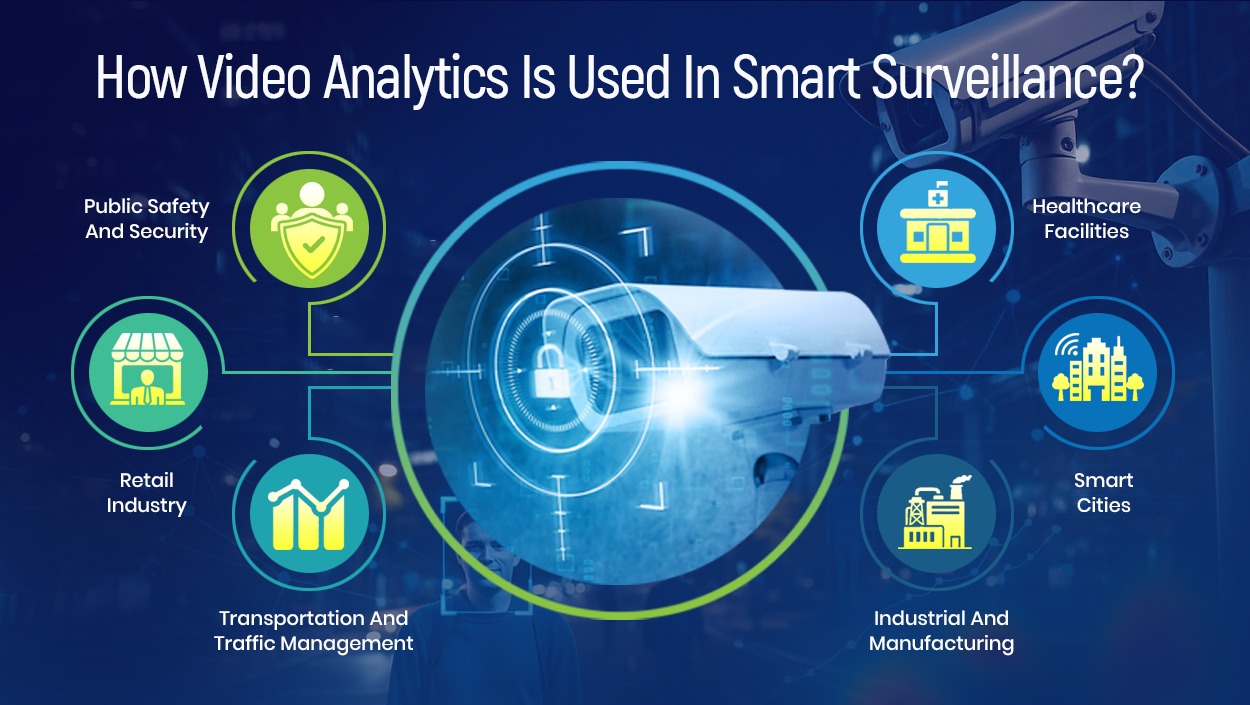
GIven below are the reasons why video analytics is used in smart surveillance:
Governments and law enforcement agencies use Video Analytics to watch places, find suspicious activities and respond to emergencies. Smart surveillance systems can recognize faces track people across cameras and find things that have been left behind.
Retailers use Video Analytics to understand how customers behave, make their stores better and reduce theft. They can use Video Analytics to make heatmaps and understand how many people are in their stores.
Video analysis software is used to watch traffic find accidents and make roads safer. Automated systems can recognize when someone is speeding or running a light.
Hospitals use Video Analytics to keep patients safe, watch areas that are restricted and make their operations more efficient. It can also help find when someone has fallen or is behaving in a way that's not normal.
Smart cities use video analytics services to manage their infrastructure, watch places and make their cities better. These systems help make cities safer and more efficient.
Factories use Video Analytics to check the quality of their products, make sure they are following safety rules and make their processes better. It helps find when equipment is not working correctly and keeps workers safe.
Given below are the benefits of video analytics in video surveillance explained in detail:
One of the things about Video Analytics is that it can find threats as they are happening. This allows for a response and reduces the risk of something bad happening.
Traditional video surveillance requires someone to watch the screens all the time, which can be boring and lead to mistakes. Video Analytics systems can watch the video footage without getting tired. Make fewer mistakes.
Businesses can use the information from Video Analytics to make their operations better, streamline their processes and increase productivity.
Although it may cost a lot to start using Video Analytics it can save money in the long run by reducing the need for people to watch the screens and preventing losses.
The information from Video Analytics can help organizations make decisions and plan for the future.
The accuracy of Video Analytics systems depends on the quality of the video footage that is used to train them. This is where Data Annotation comes in. Data Annotation is the process of labelling the video footage so that the computers can understand what they are seeing.
For example, in a store, annotated data can help the Video Analytics system recognize the difference between customers and staff. In traffic management labelled datasets can help the system recognize types of vehicles.
Every organisation has surveillance needs. AI Development services allow businesses to create custom Video Analytics solutions that are tailored to their requirements.
Custom solutions can include things like facial recognition systems, licence plate recognition, behaviour analysis models and crowd management systems. These tailored systems are more accurate and relevant than solutions.
Given below are the challenges faced during the implementation of video analytics:
The use of video surveillance raises concerns about privacy and how the footage is used. Organizations must make sure they are following the rules and being ethical.
Deploying advanced Video analysis software requires an investment in technology and infrastructure.
Integrating Video Analytics with existing systems can be difficult. It requires technical expertise.
Although AI models are very advanced, they can still make mistakes. Generate false alarms. Continuous improvement and training are necessary.
Handling amounts of video footage requires robust storage and management solutions.

Given below are the future trends in video analytics explained in detail:
Future Video Analytics systems will not detect events but also predict them, allowing for proactive decision-making.
The combination of devices and video surveillance will create more intelligent and connected ecosystems.
Improved algorithms will make facial recognition systems more accurate and faster.
Processing data at the edge will reduce latency. Improve real-time performance of Video Analytics systems.
Organizations will increasingly use insights from Video Analytics to drive growth and innovation.
The development of Video Analytics has changed video surveillance into intelligent data-driven systems. By using technologies like AI, machine learning and computer vision organizations can enhance security, improve efficiency and gain valuable insights.
From safety to retail and smart cities, the applications of Video analysis software are vast and continuously expanding. With the support of Data Annotation services and AI Development services businesses can create custom solutions that meet their needs. As technology continues to evolve Video Analytics will play a more critical role in shaping the future of smart surveillance.
1. What Is Video Analytics In Smart Surveillance?
Video Analytics is the use of AI and machine learning to analyse video footage automatically, enabling real-time detection of events, behaviours and anomalies.
2. How Does Video Analytics Improve Security?
It enhances video surveillance by providing real-time alerts, detecting activities and reducing reliance on manual monitoring.
3. What Industries Benefit From Video Analytics?
Industries such as retail, healthcare, transportation, manufacturing and smart cities benefit greatly from Video Analytics.
4. Why Are Data Annotation Services Important In Video Analytics?
Data Annotation services provide labelled datasets that help train AI models, improving the accuracy and performance of Video analysis software.
5. What Is The Future Of Video Analytics?
The future includes analytics, IoT integration and more advanced AI capabilities, making Video Analytics even more powerful and efficient

Don’t Worry we are here to increase your business potential with our result-oriented solutions.


Leave a Comment
Your email address will not be published.