

We use cookies to ensure that we give you the best experience on our website.
By using this site, you agree to our use of cookies. Find out more.
 March 30, 2026
|
March 30, 2026
|
 |
|
 Video Analytics
In today's world businesses are always looking for ways to get ahead. Traditional data sources like CRM systems and sales reports are helpful. They miss one important part. Visual data. This is where Video Analytics comes in. It turns video footage into insights, helping organizations make better decisions.
From improving efficiency to understanding customer behaviour, modern video analysis software is changing how companies use data. With advancements in AI and machine learning, video analytics services are becoming essential for businesses.
Video Analytics uses AI and computer vision to analyze video data. Unlike traditional video surveillance, which monitors and records, it finds patterns, detects anomalies, and provides insights.
By combining video analytics with business intelligence systems, organizations get an understanding of operations, customers, and market trends.
Modern video analysis software uses algorithms to process video feeds in real time or from stored footage. These systems identify objects, track movement, analyse behaviour, and detect activities.
The process involves capturing video, processing data using AI models, and generating insights through dashboards or alerts. Businesses use these insights to optimize processes, improve security, and enhance customer experiences.
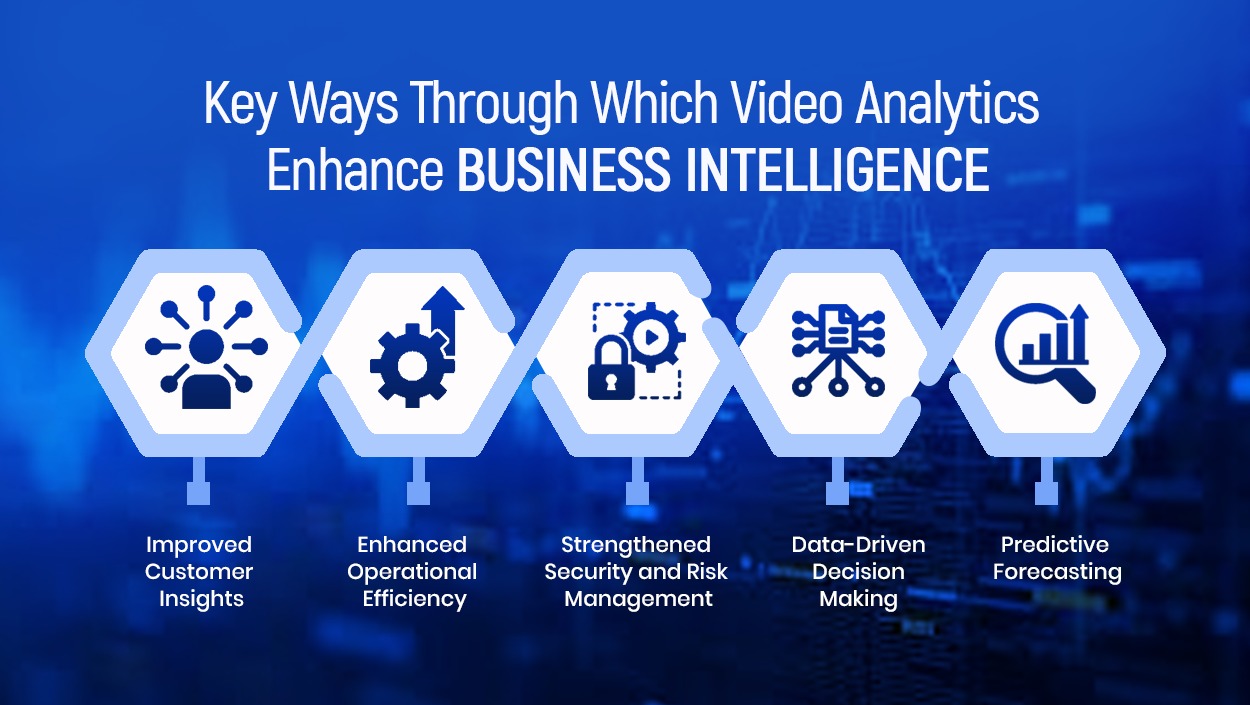
Given below are the important ways through which video analytics improve business intelligence:
Understanding customer behaviour is crucial. Video Analytics helps businesses analyse customer movement, preferences and engagement in spaces. Retailers use it to track foot traffic, identify areas in stores and understand how customers interact with products. These insights help businesses optimize store layouts, improve product placement and increase sales.
Organizations use video analytics services to monitor workflows and identify inefficiencies. In manufacturing, it tracks production processes, detects bottlenecks and ensures compliance with safety standards. By automating monitoring tasks, businesses reduce intervention, leading to faster and more accurate decision-making.
Traditional video surveillance systems rely on monitoring, which can be error-prone. It enhances security by detecting suspicious activities, unauthorized access and potential threats. Real-time alerts enable businesses to respond to incidents, minimising risks and preventing losses.
Video Analytics provides time and historical data that can be integrated into business intelligence platforms. This allows organizations to make decisions based on actual behaviour and trends. For example, businesses analyse peak hours, customer flow and employee performance to optimize operations and resource allocation.
Advanced video analysis software uses machine learning to predict trends based on historical data. Businesses can anticipate customer demand, identify risks, and plan strategies. Predictive insights give organizations an approach enabling them to stay ahead of competitors.
GIven below are the applications of video analytics across different industries:
Retail businesses use it to understand customer behaviour, reduce theft and improve store performance. Insights from video data help optimize merchandising strategies and enhance customer experiences.
Hospitals use video analytics to monitor activity, detect falls and improve operational efficiency. This enhances safety and reduces response times.
In manufacturing, video analytics services help monitor production lines, ensure quality control and maintain worker safety. These insights contribute to improved productivity and reduced downtime.
Video analytics is used to monitor traffic, optimize routes and improve safety in transportation systems. Businesses can reduce delays. Enhance operational efficiency.
Financial institutions use advanced video surveillance combined with analytics to detect fraud, monitor transactions and ensure security.
Many organizations use Global Capability Center services to scale video analytics solutions. These centers provide access to professionals, advanced infrastructure and cost-effective development models. By utilising GCCs, businesses can accelerate innovation, reduce costs and ensure seamless deployment of these systems.
GIven below are the benefits of video analytics for business intelligence:
Businesses gain access to actionable insights, enabling quick decision-making.
AI-powered systems reduce errors and provide more reliable data analysis.
Automation reduces monitoring, saving time and operational costs.
Modern video analysis software can scale with business needs, handling volumes of data efficiently.
Organizations that leverage video analytics services gain insights and respond faster to market changes.
GIven below are the challenges and considerations of video analytics solutions explained in detail:
Handling video data requires adherence to privacy regulations.
Implementing video analytics systems can require upfront costs.
Integrating it with existing business intelligence systems can be challenging.
Large volumes of video data require storage and processing capabilities.
The future of Video Analytics lies in AI integration, real-time processing, and predictive capabilities. As technology evolves, it will become more accessible and affordable.
Emerging trends like edge computing, cloud integration, and IoT connectivity will enhance video analytics solutions. Businesses will analyze data faster, gain insights, and make informed decisions. The combination of it with technologies will create a more holistic approach to business intelligence.
Read More - Why Global Capability Centers Are the Future of Global Business Operations
Video Analytics is revolutionising business intelligence. By transforming video data into actionable insights, organizations improve efficiency, enhance security, and better understand customers. With video analysis software and reliable video analytics services, businesses can unlock the full potential of video data.
1. What is video analytics in business intelligence?
Video analytics in business intelligence refers to the use of AI-powered tools to analyse video data and generate insights.
2. How is video analytics different from video surveillance?
Video analytics extracts insights and detects patterns. It provides actionable data, unlike traditional video surveillance.
3. What industries benefit from video analytics services?
Industries like retail, healthcare, manufacturing, transportation and finance benefit significantly.
4. What is video analysis software?
Video analysis software uses AI and machine learning to process video data and generate insights.
5. How do Global Capability Center services support video analytics?
Global Capability Center services provide talent, infrastructure and cost-effective solutions for implementing and scaling video analytics systems.



Don’t Worry we are here to increase your business potential with our result-oriented solutions.
Leave a Comment
Your email address will not be published.